
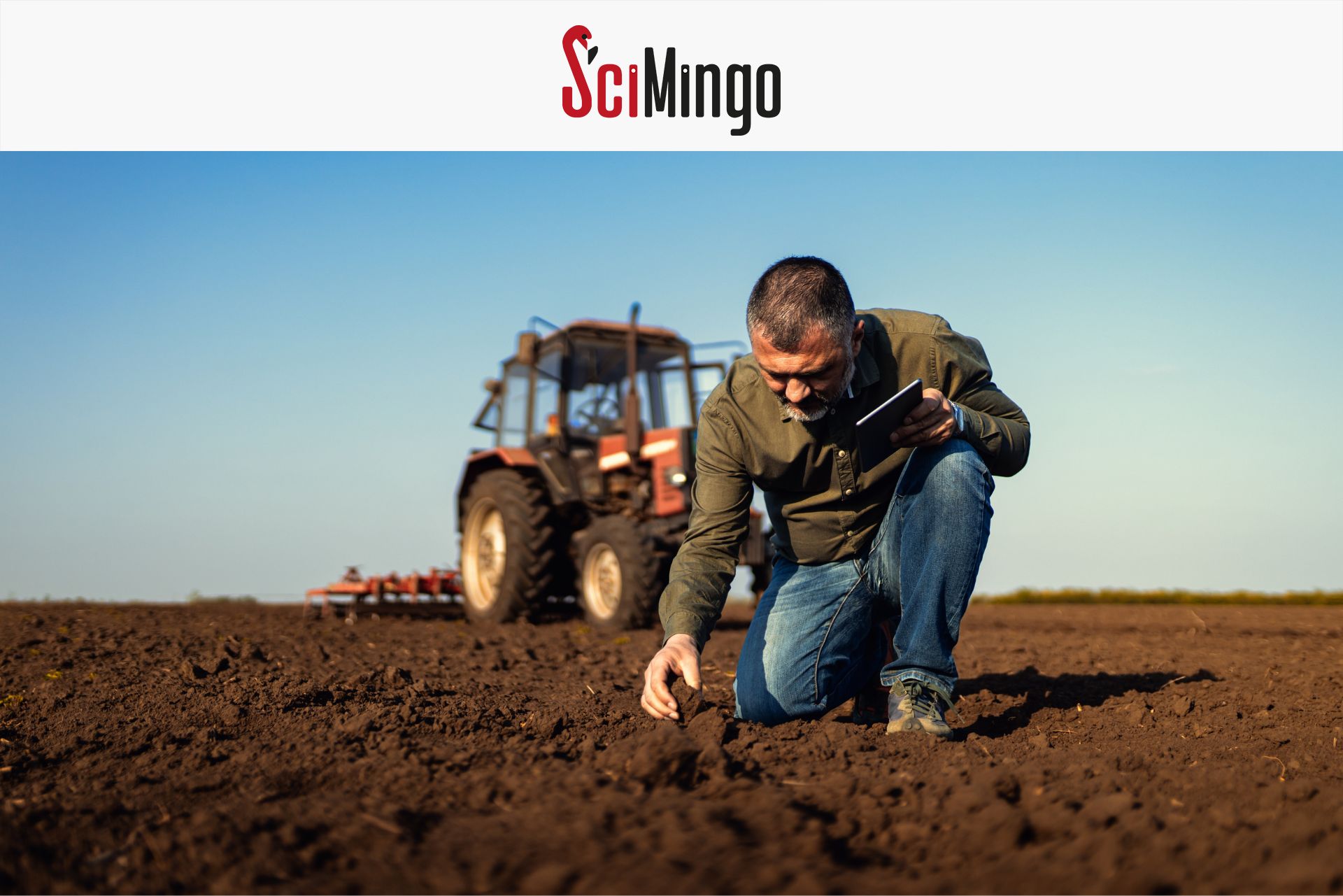
Why Soils Matter
Have you ever tried growing your own vegetables only to find that — despite your best efforts — something is going wrong? Maybe you looked for advice with your neighbor, but they weren’t willing to share any tips, or their tools were completely different. Perhaps you went online, but the information was spread across dozens of gardening blogs, TikTok tutorials, books from your favorite garden guru, or locked behind paywalls. Frustrating, right?
In the European agricultural industry, the same problem is happening at the scale of an entire continent — with the future of our food, water, and climate at stake. This is the challenge that scientists, farmers, and policymakers face when trying to restore the soils in Europe.
A Continent in Crisis
Although soil is something easily overlooked (or better: overstepped), it plays a fundamental role for all life on earth. It grows our food, stores and filters water, regulates our climate, and is home to a large diversity of soil organisms. Yet in Europe, this precious resource is degrading fast.
Decades of intensive agriculture, urbanization, and industrial activities have taken their toll. Today, over 60% of the soils in Europe are considered unhealthy. Europe has set an ambitious goal to reverse this trend and have 75% of our soils healthy or significantly improved by 2030. To get there, we need reliable, harmonized data and knowledge that farmers, researchers, and policymakers can access and build upon.
Over 60% of the soils in Europe are considered unhealthy.
However, soil data and knowledge in Europe is spread across hundreds of databases, research institutions, and national repositories. Much of it is difficult to locate or hidden behind paywalls — much like the gardening advice you may have gone looking for yourself when your plants wilted unexpectedly.
Even if farmers, researchers, and policymakers reach the data they need, using it can be very challenging as methods, formats, and standards vary between different countries. Useful knowledge to make our soils healthy exists in Europe, but it is currently very difficult to find and implement.
Solving the Data Puzzle
This is where the SoilWise project comes in. SoilWise is a European research project that is building a one-stop shop for soil data and knowledge across Europe in the form of an online catalogue. It brings together scattered datasets, research findings, and expert knowledge into one place, where anyone who needs it can find it, access it, and build upon it.
Think of it as a search engine for soil data — the catalogue doesn’t store all the data itself, but knows where everything is. The catalogue automatically scans and collects soil data and knowledge from trusted sources across Europe, checks its quality, and makes it searchable. This ensures that users don’t have to do that detective work themselves. Digital technologies, including artificial intelligence, are used to break down the barriers that have kept soil data and knowledge fragmented for so long.
“SoilWise offers more than a technical solution — it is also being built together with people who need it most.” – Wannes De Man
But SoilWise offers more than a technical solution — it is also being built together with people who need it most, including farmers, researchers, policymakers, business actors, and public authorities. By doing so, SoilWise ensures that the catalogue actually works for them in practice and that soil knowledge can be translated into better decisions on the ground.
From Data to Discovery
The SoilWise project was launched in 2023, and the impact of SoilWise is already tangible. Using the SoilWise catalogue, researchers at the Leibniz Centre for Agricultural Landscape Research (ZALF) in Germany discovered experimental data which helped them to predict the groundwater for grasslands, which would likely have been difficult to find otherwise. This saved them time and resources that would otherwise have gone into collecting the data from scratch. By reusing that data in a scientific paper — which itself feeds back into the catalogue — their work illustrates exactly the effective cycle SoilWise aims to create, where data is found, reused, and shared back for others to build upon.
Read this article to learn more about soil microbes and how they can help plants grow during drought!
SoilWise is looking to connect with researchers, farmers, and data providers who are sitting on valuable soil data. By sharing their data with the project, they can help create benefits for themselves and others, making vital information available to those who need it most.
The more knowledge we pool together, the better our chances of restoring Europe’s soils to health — creating the conditions we need for a more sustainable environment and healthier food for everyone.
Curious about the soil beneath your feet? Got data to share? Explore the SoilWise catalogue at https://soilwise-he.eu/repository/!