
Seppe Terryn is an assistant professor in robotics at VUB and imec. For over a decade, his lab has been quietly solving a deceptively hard problem: how do you make a material that heals itself when cut?
The answer originally led to the development of self-healing robots. Now, Terryn is taking the technology one step further in a project developing self-healing phantoms with the potential to transform surgical training for surgeons, physicians, nurses, and healthcare professionals.
The Need for Better Surgical Models
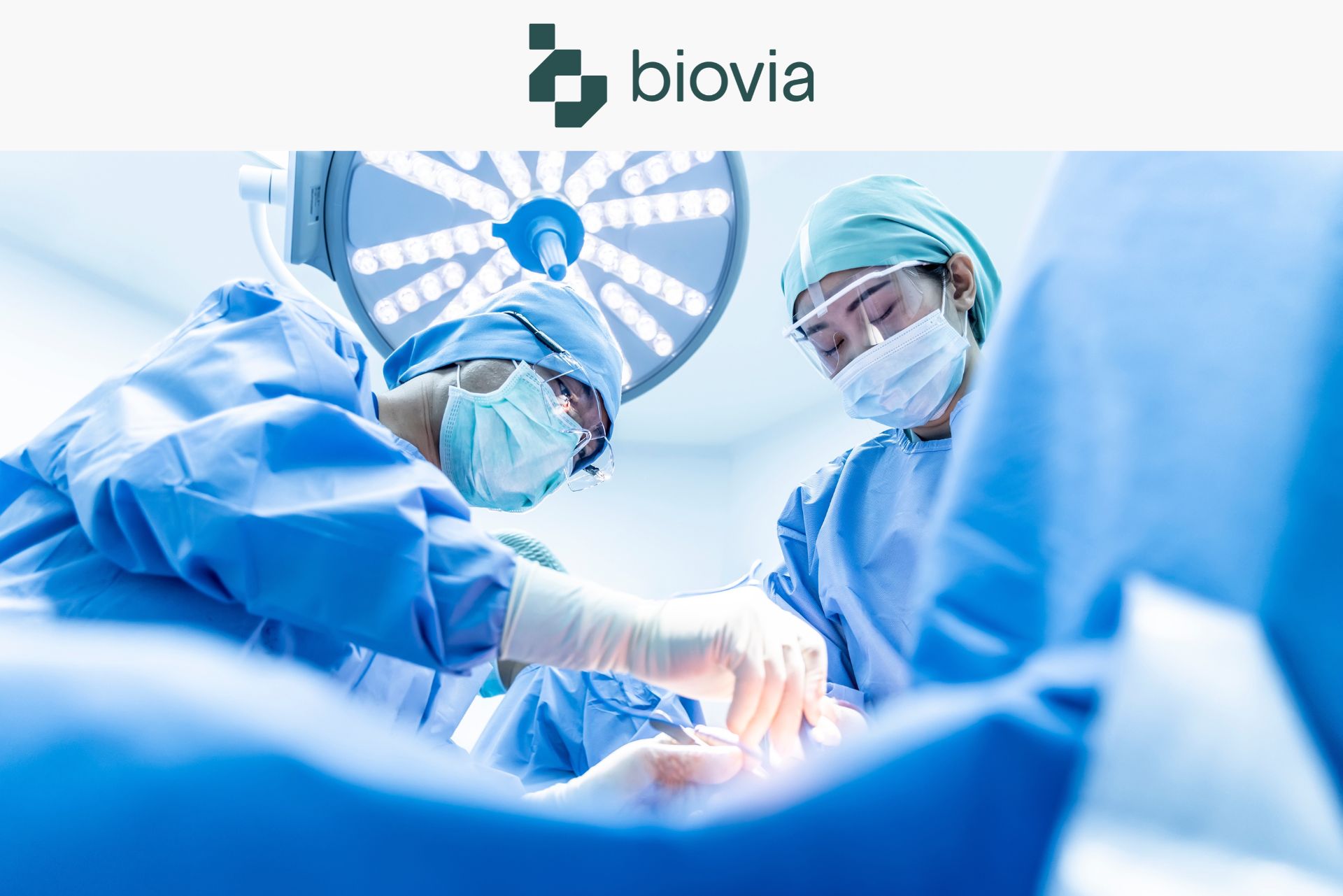
Walk into most surgical skill training courses at university hospitals and you’ll find a familiar toolkit: anatomical models too expensive to cut, simple patches that don’t feel like real tissue, or animal cadavers.
All of these tools have clear limitations. Terryn is focused on the anatomical models and synthetic patches, where costs are high and realism is low. A full-body phantom can cost tens of thousands of euros. Even simple skin patches cost between 30 to 40 euros each and, once used, they won’t look the same as they used to.
“There is a clear need for better surgical training solutions.”
“The patches are an unsustainable consumable,” says Terryn. “They’re used and then thrown away.” Conversations with training centers at UZ Brussel, UZ Leuven, UZ Antwerp and the Orsi Academy confirmed what Terryn suspected: there is a clear need for better surgical training solutions.
Self-Healing Phantoms
This unmet need is what gave rise to the RESSURG project, an acronym for REalistic Self-healing SURGical trainers. The project involves a consortium of three different partners — imec, VUB, and KU Leuven — and was supported by Biovia in its successful application for 2 million euros of VLAIO funding. Every year, VLAIO earmarks at least 8 million euros for these types of collaborative health innovation projects. RESSURG was part of the most successful year to date, with Biovia helping 10 projects gain approval for a combined total of more than 12 million euros in 2025.
Find out more about Biovia’s VLAIO funding, including the current Project Call 2026.2!
The goal of RESSURG is to create phantoms and patches that realistically mimic the biomechanics of biological tissues and human body parts, ranging from multi-layer skin patches to far more complex parts, such as the thyroid to train cricothyroidotomies. At the heart of the project lies the self-healing materials developed by Terryn’s lab. These polymers behave like flexible elastomers: stretchy, resilient, and tunable in stiffness — similar in many ways to human tissue.
A Sustainable Model
Their healing ability is based on special, reversible chemical bonds: when the material is cut, those bonds spontaneously reform without the need for any external intervention. Within about an hour, the material can recover fully, even from large damages such as cuts, regaining close to 100% of its original mechanical properties.
The fact that the damage is carefully controlled by a surgeon-in-training is what makes these materials a particularly good fit for surgical trainers. “One big limitation of self-healing technology is that we don’t grow new material — we can only put things back together,” Terryn explains.
“The materials can be used to create sustainable, reusable models for medical students, nurses, physicians, surgeons, and other healthcare professionals.”
In many applications, you can’t predict where or how damage will occur, but in surgical training, you can. The cuts are deliberate, the interactions are well known, and the materials can be designed to close them back up reliably, which means the materials can be used to create create sustainable, reusable models for medical students, nurses, physicians, surgeons, and other healthcare professionals.
Smarter Phantoms, Better Outcomes
Reusability alone would already shift the economics of surgical training. But the ambitions of this project go further than that. The RESSURG phantoms are being designed with built-in, self-healing sensors to track surgical interactions during training.
The implications are significant. Imagine a phantom of the throat used to train cricothyrotomy — the emergency procedure performed when someone is choking and cannot breathe. If the incision is too close to the vocal cords, the consequences are irreversible. In a RESSURG phantom, sensors at the critical anatomical landmarks will trigger an alert the moment a trainee strays into the danger zone. Training becomes more realistic, but also instructive in real time.
“You can make the evaluation of training much better and objective if there is also fine-grained, quantitative data.” – Seppe Terryn
“Surgeons-in-training are in many cases evaluated by an expert who visually inspects how the surgery was performed,” says Terryn. “But you can make the evaluation of training much better and objective if there is also fine-grained, quantitative data.”
That data could eventually enable autonomous training, without supervising experts present, which opens potential applications beyond hospital simulation labs. With a phantom that can be reused dozens of times instead of once without requiring expert assessment, the cost per training session drops dramatically, making these models economically viable for settings such as such as battlefield medicine, low-resource settings, and rural healthcare.
A Beachhead for Other Medical Applications
Terryn considers the RESSURG project a strategic stepping-stone. Surgical phantoms are classified as medtech products, making them a relatively accessible entry point for other advanced applications for the materials, such as self-healing wound patches, resilient implants, or biocompatible coatings. “We see these phantoms as an ideal initial medical application for our technology,” says Terryn.
Read this article to learn more about another Biovia VLAIO project: AstroCardia!
The project will soon begin investigating biocompatibility, and a self-healing patch prototype already exists, with clinical feedback gathered through several design iterations. The project will next focus on evaluating biocompatibility, a critical step that could unlock a broad range of healthcare applications — from external wound-healing devices and smart dressings to fully implantable, self-repairing materials used within the body, such as regenerative scaffolds and long-lasting implants.
RESSURG is precisely the kind of collaborative health innovation project that Biovia helps build, bringing together the partners and funding needed to transform ideas into tangible solutions, guided by the cluster’s six newly launched strategic Roadmaps.
“Whenever you have an idea that you want to bring into health,” Terryn says, “this cluster is the way to go. For me, Biovia was both an initiator and a catalyst.”
Biovia’s Project Call 2026.2 is now open for innovators developing solutions to unmet medical needs!
Learn more about Biovia’s strategic Roadmaps!